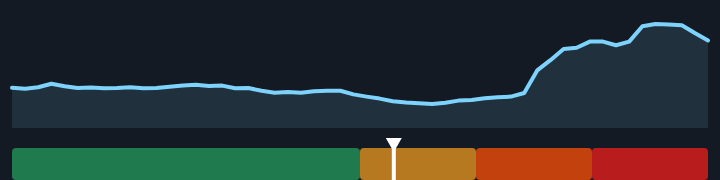
Gas prices of $4.15 directly affect what families spend on driving and commuting, and higher gas historically correlates with voters becoming unhappy with whoever is in office.
The economic weather is tightening on multiple fronts. Gas prices are easing to $4.15 from $4.45 a month ago, which helps at the pump, but borrowing costs are spiking: the 10-year Treasury yield has climbed to 4.56% and 30-year mortgages to 6.48%, making home loans and business credit much more expensive. Consumer confidence has fallen to 50, near its lowest level in months, which means households are pulling back on spending and voters typically become unhappy with whoever is in office. That economic weakness is rippling through the markets: traders cut JD Vance's odds of announcing a presidential run before mid-2027 by 24 percentage points overnight, and other major political outcomes moved by 13 to 38 points. The yield curve is flattening (now 0.40% from 0.48%), a historical warning sign for economic stress ahead.
→ Open the live interactive board
Get this every morning
Delivered to your inbox at 6:30, with the full archive, alerts, and the live board →
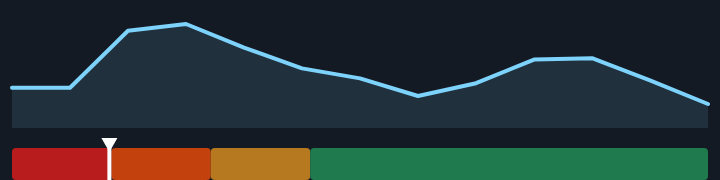
Gas prices of $4.15 directly affect what families spend on driving and commuting, and higher gas historically correlates with voters becoming unhappy with whoever is in office.
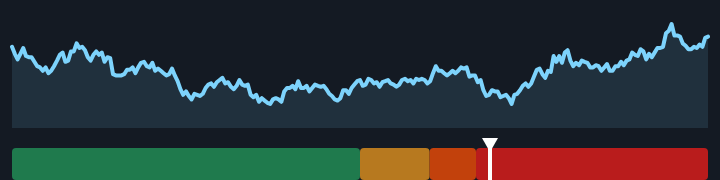
When the 10-year Treasury yield rises to 4.56%, mortgages become more expensive and businesses are less willing to borrow for expansion, which can slow hiring and investment.
Source: FRED
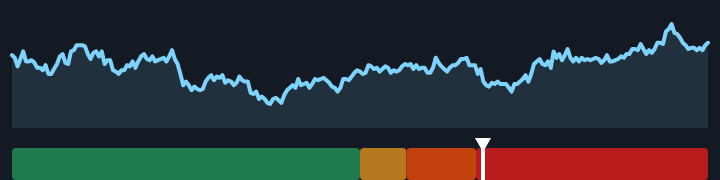
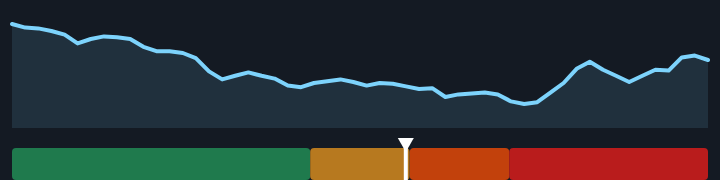
The 30-year Treasury rate at 5.03% sets what families pay for 30-year mortgages, and elevated rates like this can freeze the housing market as buyers drop out.
Source: FRED
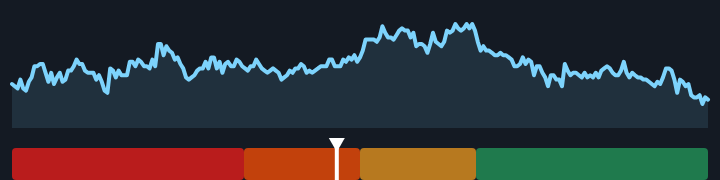
When the gap between short and long-term interest rates shrinks to 0.40%, it is historically a warning sign that economic weakness is coming.
Source: FRED
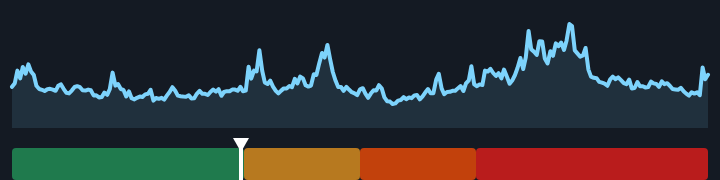
Consumer sentiment at 50 shows families are scared, not confident, which means they cut spending and that slowdown can snowball into recession.
The VIX at 19.9 measures how much fear traders feel in stock markets, which affects whether regular people want to invest their retirement savings or pull money out.
Source: FRED
The 30-year mortgage rate at 6.48% sets the monthly payment families would pay on a home, and higher rates like this price out buyers and slow the housing market.
Source: FREDIn plain terms: the public’s money is very confident this will not happen, and grew a little less sure overnight.
Market consensus at 10% reflects skepticism of a near-term announcement given Vance's current VP role and weak economic conditions (gas $4.12, consumer sentiment 57) that typically disfavor incumbent administration moves. Agreement across platforms suggests genuine uncertainty ra
In plain terms: the public’s money is very confident this will not happen, and grew much less sure overnight.
Massive 48-point spread between Kalshi (63%) and Polymarket (15%) on U.S. recognition of breakaway Somaliland. Disagreement likely reflects different interpretations of Trump's foreign policy priorities, geopolitical constraints with Somalia, and whether recognition occurs via ex
In plain terms: the public’s money is close to a coin flip on whether this will happen, and grew much more sure overnight.
Polymarket prices the Knicks 9 points higher than Manifold (31% vs 22%), suggesting different assessments of roster trajectory and Eastern Conference competitiveness. The spread is too narrow to arbitrage after fees, but indicates genuine uncertainty about whether New York's curr
In plain terms: the public’s money is close to a coin flip on whether this will not happen, and grew much less sure overnight.
β
In plain terms: the public’s money is leaning that this will not happen, and grew much less sure overnight.
Polymarket (8%) and Kalshi (48%) show extreme divergence on Tomac's PM prospects, suggesting fundamental disagreement about Romanian political dynamics or event definition. Weak consumer sentiment and elevated energy costs create unfavorable conditions for incumbent-aligned candi
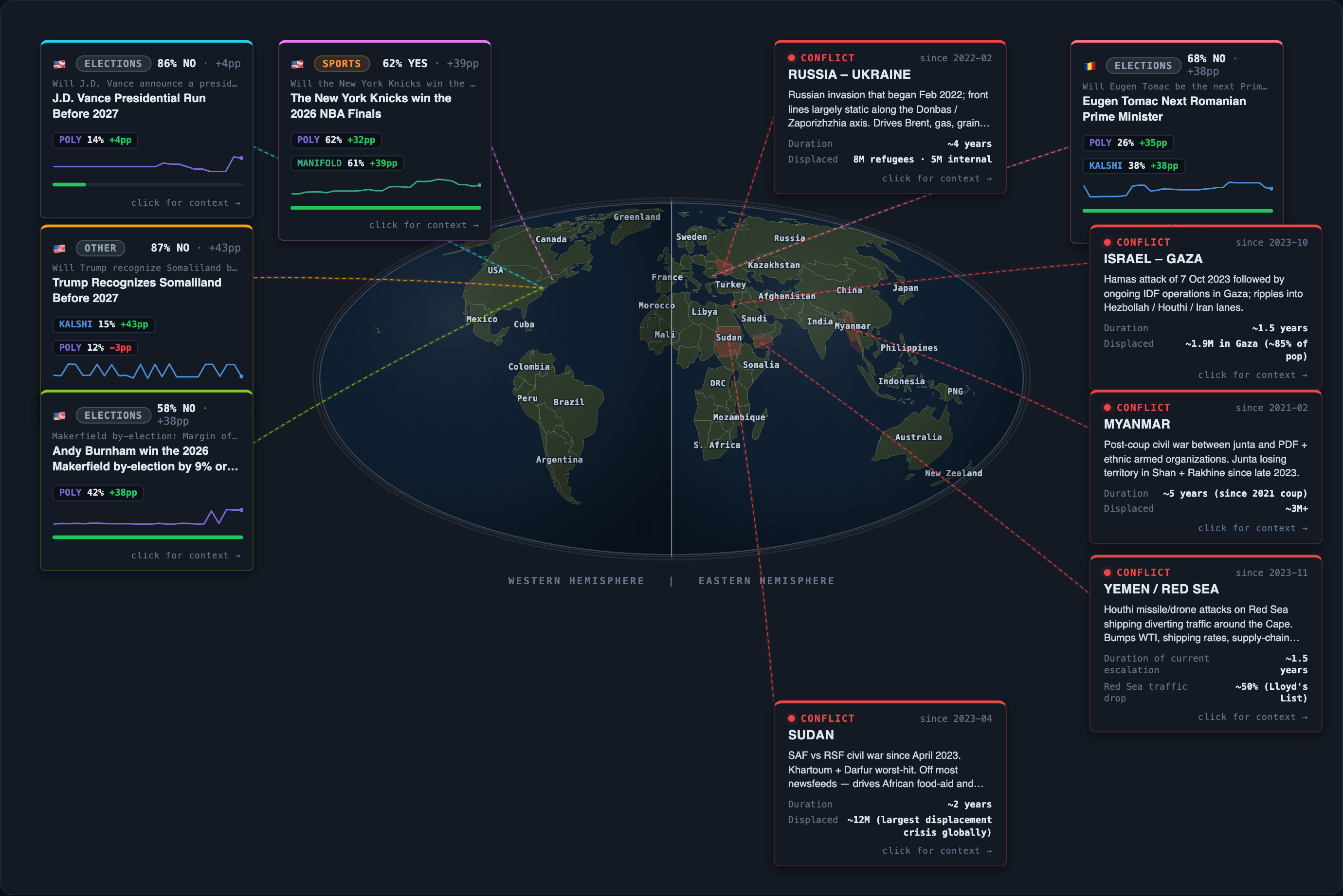
Hamas attack of 7 Oct 2023 followed by ongoing IDF operations in Gaza; ripples into Hezbollah / Houthi / Iran lanes.
Russian invasion that began Feb 2022; front lines largely static along the Donbas / Zaporizhzhia axis. Drives Brent, gas, grain, defense-stock pricing.
SAF vs RSF civil war since April 2023. Khartoum + Darfur worst-hit. Off most newsfeeds β drives African food-aid and gold-flow markets.
Houthi missile/drone attacks on Red Sea shipping diverting traffic around the Cape. Bumps WTI, shipping rates, supply-chain timing markets.
Post-coup civil war between junta and PDF + ethnic armed organizations. Junta losing territory in Shan + Rakhine since late 2023.
| AMERICAS | 4 rose 0 fell 0 flat |
| EUROPE | 0 rose 0 fell 0 flat |
| ASIA | 0 rose 0 fell 0 flat |
| MENA | 0 rose 0 fell 0 flat |
| CRYPTO | 0 rose 0 fell 0 flat |